Engagement ring atelier · Lviv
We choose a diamond by its light, not by its paperwork.
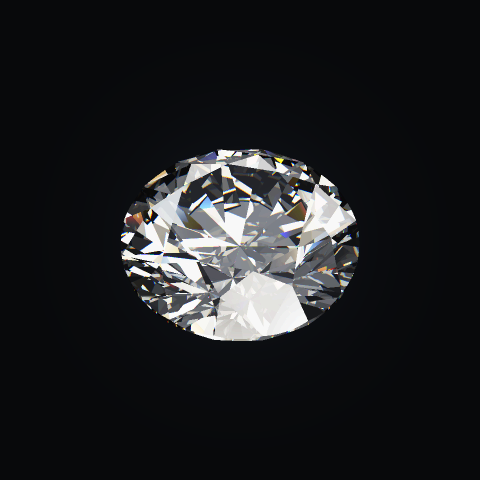
This is not a photo. It is a ray trace through 57 facets with your proportions. Change the cut, colour or weight and see how much light comes back — and what it costs.
Your stone
- 63 % bright
- 5 % side light
- 21 % contrast
- 11 % leakage
- Diameter
- 6.47 mm
- Depth
- 3.93 mm · 60.7 %
- Cut score
- 75 / 100 · excellent
- Fire
- 1.34°
- Diamond
- $6,200
- Setting
- $690
- Total
- $6,890
Prices are demo values. The rate and price list live in the site data.
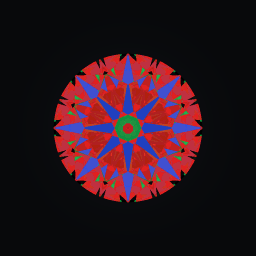
- bright 45–75° above the girdle
- side light 0–45°
- contrast 75–90°, observer's shadow
- leakage below the girdle
01 — Light
Where the light goes: three stones of the same weight
The map shows where the light reaching your eye comes from. Red is bright light from above. Green is weaker light from the sides. Blue is the shadow of your own head: it gives contrast. Dark is light that left through the pavilion and never came back.
Zones follow the ASET tool (Sasián et al., Optical Engineering, 2007). Face-up calculation.
02 — Cross-section
Change an angle and watch where the ray leaves
A section through the main facets, in true proportions. Rays enter from above. If the angle of incidence on a facet from inside exceeds the critical angle, light reflects completely. If it is smaller, light escapes.
- 63 % bright
- 5 % side light
- 21 % contrast
- 11 % leakage
- Cut score
- 75 / 100 · excellent
- Fire
- 1.34°
- Depth
- 60.7 %
- GIA Excellent range
- within
9 of 9 rays came back through the crown. The critical angle of diamond is 24.4° (sin θ = 1 / n, n = 2.417). The coloured fan at the exit is dispersion: blue bends more than red.
The score is our own scale based on the light calculation, not a lab grade. The GIA range is for reference.
03 — Setting
The same stone — in metal and in your size
The setting is computed from geometry: the band is a torus, and its volume times the alloy density gives the mass. Stone and ring share one scale, so you see how it will sit on a finger of your size.
- Metal mass
- 4.4 g
- Circumference
- 51.8 mm
- US size
- 6.00
- Setting
- $690
Alloy densities are reference values, g/cm³: platinum 950 — 20.7; white gold 750 — 15.7; yellow 750 — 15.5; rose 585 — 13.2. US size = (diameter − 11.63) / 0.8128.
04 — Budget
Name a sum and we will show three honest ways to spend it
Price per carat climbs in steps at 0.50, 0.70, 0.90, 1.00, 1.50, 2.00 ct. A stone just under a “round” weight looks almost the same and costs noticeably less. We never save on cut, in any option.
-
Largest look
1.13 ct · 6.74 mm · H / SI1
Colour and clarity at the edge of what the eye can see. Everything else goes into diameter.
$6,000
-
Balance
0.99 ct · 6.45 mm · G / VS2
Near-colourless and eye-clean. The option chosen most often.
$5,050
-
Collector
0.89 ct · 6.22 mm · E / VVS2
Colourless and clean under a loupe. Smaller, but rarer.
$5,070
- Largest look
- Balance
- Collector
- weight, carats
In yellow and rose gold we go a colour grade or two lower: a warm setting hides the tint.
Services and prices
Prices are demo values for this concept. The stone price comes from the configurator above: it depends on weight, colour, clarity and cut.
Consultation
We show stones under a loupe and on the light map, and fit them to your budget.
free60 min
Solitaire ring
One stone in six prongs. Platinum or gold, made to your size.
from $680setting, no stone
Halo setting
A centre stone framed by a ring of small diamonds.
from $1,100setting, no stone
Diamond sourcing
We find a stone with your proportions and check the girdle inscription.
from $580with a lab report
Resizing
Up to two sizes, with polishing. Once free for our own rings.
$30
Engraving
A date or a word inside the band, up to 20 characters.
$22
How a ring is made
From the first talk to the box — about four weeks.
Talk and budget
You build a configuration on the site or together with us. We fix the budget, size and metal.
1 days
The stone
We bring two or three stones with reports and compare their proportions on the light map.
5 days
Setting model
A 3D model for your stone and size, then a wax fitting on the finger.
4 days
Casting and setting
We cast, polish and set the stone in the prongs, then check it under a microscope.
14 days
Handover
The ring, the stone report and a passport with the metal weight and fineness.
1 days
What comes with the ring
These terms are an example for the concept site: yours will go here.
Lab report
A stone with a laboratory report
Stones from 0.30 carat come with a report from an independent gemmological lab. We check the report number against the laser inscription on the girdle with you.
14 days
Exchange or refund
If the ring is not right, we exchange it or refund you within 14 days. Engraved pieces can be exchanged only.
No time limit
Cleaning and prong checks
Twice a year we clean the ring ultrasonically and check that the prongs hold. Free for our own pieces.
Ring passport
Weight, fineness, proportions
The passport lists metal mass, fineness, stone weight and proportions — the same numbers you saw in the configurator.
Questions before you order
Is this a photo of the stone or a drawing?
Neither. It is a calculation: a ray from the eye enters the stone, reflects off the facets by Snell's law and exits toward a light source. For every pixel, on your device.
Why does cut matter more than colour and clarity?
Colour and clarity show under a loupe; cut shows from across the room. It decides whether light returns to the eye or leaves through the pavilion. The light map makes it obvious.
Natural or lab-grown diamond?
Optically it is the same material: the same refractive index and the same calculation. The origin and the price differ. We will show both side by side.
What if I get the size wrong?
Size is the inner diameter in millimetres. We send a set of sizing rings or measure a ring she already wears. One resizing is included in the price.
Is the cut score on this site a lab grade?
No. It is our own scale, computed from a face-up ray trace. The official grade is given by a laboratory in its report. GIA ranges are shown for reference.
Atelier
- Daily, by appointment
- 11:00–20:00
- Phone
- +380 00 000 00 00
- Atelier
- 9 Imaginary St, Lviv
The address and phone are fictional: this is a concept site.